
What's really in your ice-cream? ...and what are 'flavours' anyway?
It might seem like an odd topic for the middle of winter, but if your kids are anything like mine, ice-cream is definitely not just a summer food!
These school holidays I've been running Mad Food Science Vacation Care sessions at Gowrie NSW Centres. One of the highlights is tasting my homemade tropical ice-cream while exploring what's really in many supermarket varieties.
The children are often surprised to discover that many ice-creams contain artificial colours, additives and flavourings rather than the real ingredients pictured on the front of the pack.
The vanilla ice-cream surprise...spoiler alert, no vanilla!!!
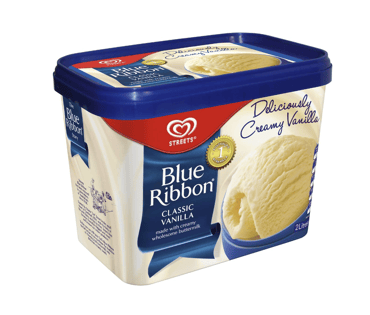
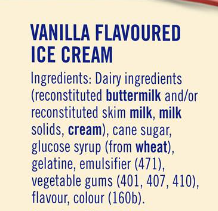
We look at the ingredient list of a common supermarket vanilla ice-cream. Despite 'vanilla' being featured prominently on the front of the packaging, there is actually no vanilla listed in the ingredients.
Instead, the product contains colour (160b) to give it a yellow hue and a non-specific ingredient simply called 'flavour' to mimic the vanilla. The product is labelled as 'vanilla flavoured ice cream' rather than 'vanilla ice cream' – an important distinction that many of us might miss when shopping the supermarket freezer section.
So what does 'flavour' actually mean?
When we see 'flavour' listed on a food label, it doesn't tell us very much. Food regulations describe flavour as essentially a 'substance or extract added to provide a particular taste'. That flavour or flavours can be derived from natural sources or created synthetically to taste like a particular food.
What we don't realise is that in Australia, a natural flavour and an artificial flavour can be chemically identical. One may have originated from plant or animal material, while the other may have been produced in a laboratory. Either way, manufacturers are generally not required to disclose exactly what makes up the flavour blend.
Source: additive-free lifestyle Read the full article here
As a parent, I find that a little unsettling. If I'm buying a product marketed as vanilla, I'd prefer it to actually contain vanilla.
Why use flavours instead of real ingredients?
The answer is simple: cost and consistency.
Using flavourings instead of genuine ingredients can make products cheaper to manufacture and help them remain stable on supermarket shelves for longer. Food scientists are incredibly skilled at recreating tastes and aromas that closely resemble the real thing. The result is a product that tastes like vanilla, strawberry or banana without necessarily containing much (or any) of those ingredients.
The front of the pack doesn't tell the whole story
Food labels must accurately describe the product you're purchasing, but the most important information is often hidden in the fine print. That's why it's worth taking an extra few seconds to flip the packet over and read the ingredient list.
The front of the pack is designed to sell the product. The ingredient list tells the real story.
What do I choose?
When it comes to ice-cream, I generally look for products with a short ingredient list that contains ingredients I'd recognise in my own kitchen. One option our family enjoys is Haagen-Dazs ice-cream. It is usually more expensive than many supermarket brands, but it contains real cream, milk, sugar, egg yolk and vanilla extract, and real strawberries, fruit or a high cocoa chocolate.
For us, it's a good example of choosing quality over quantity. Of course, every family has different budgets and priorities. This isn't about perfection or never buying other brands. It's simply about understanding what's in the products we choose and making informed decisions.
My simple guide
When you're shopping:
- Turn the packet over.
- Read the ingredient list.
- Look for ingredients you can recognise
- If you're not sure what something is, take a moment to investigate.
- If it doesn't align with your family's values, choose a different option.
Small habits like this can make a big difference over time.
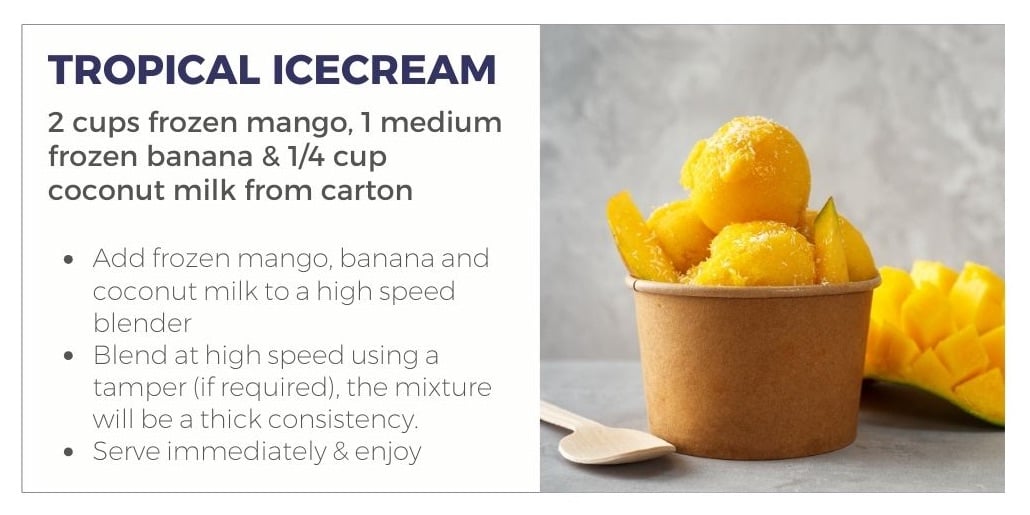
Try my homemade tropical ice-cream
If you'd like to make your own ice-cream at home, this tropical version is always a hit with kids.
Simply blend:
- Frozen banana
- Frozen mango
- A splash of milk or coconut milk
Blend until smooth and creamy.
A high-powered blender gives the best texture, but if yours struggles, simply add a little more liquid and blend gradually. It's naturally sweet, packed with fruit and perfect for enjoying all year round.
Have a wonderful rest of the school holidays and happy ice-cream tasting!